
In the world of long-term investing, the conversation often centers on stocks. Financial media, investment advisors, and even social platforms champion the market’s ability to deliver compounding returns.
Yet, beyond the volatility of the stock exchange lies a powerful, often underestimated asset class: raw land. For savvy investors focused on stability, generational wealth, and real asset ownership, raw land often outshines stocks, especially in today’s uncertain economic landscape.
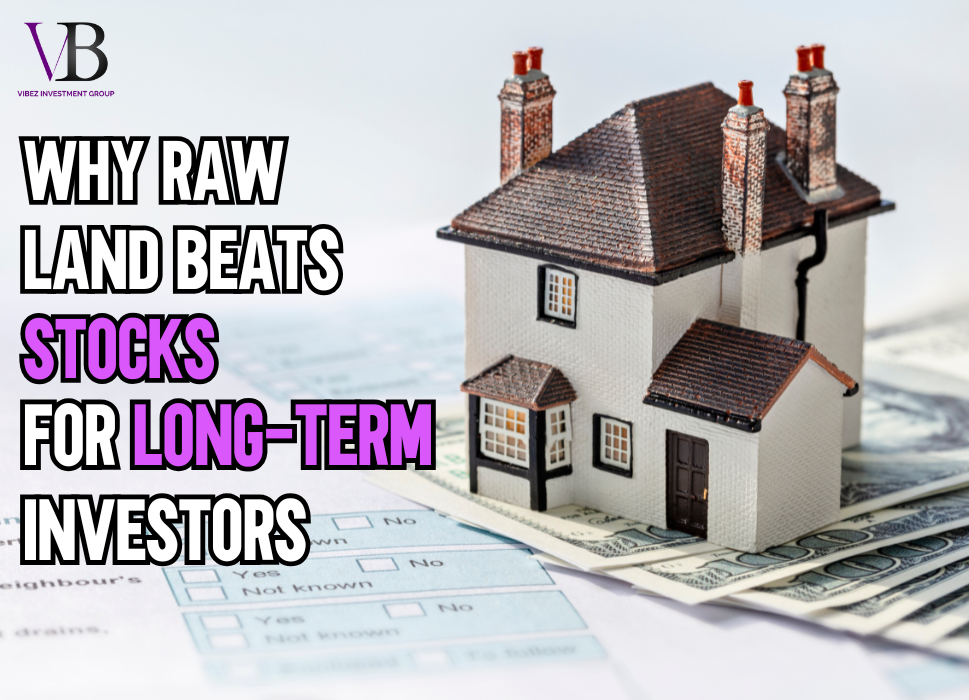
This comprehensive article explores why raw land beats stocks for long-term investors, supported by real data, timeless investment principles, and a modern look at how companies like Vibez Investment provide services that can make land ownership and liquidation easier than ever before.
The Nature of Raw Land: A Tangible and Limited Asset
Unlike stocks, which are abstract representations of corporate ownership, raw land is a physical, finite resource. The supply of land is fixed; no new acreage can be created. This scarcity factor contributes to long-term appreciation, especially in growing regions where development pressures intensify.
Consider this: according to the U.S. Census Bureau, the population of the United States is projected to reach 400 million by 2060. As the population grows, the demand for housing, infrastructure, and recreational space increases, placing higher value on undeveloped land in both suburban and rural areas.
Stability Over Volatility
One of the most attractive features of raw land is its resilience during economic downturns. Unlike the stock market, which is subject to rapid swings triggered by interest rates, earnings reports, geopolitical events, or investor sentiment raw land maintains intrinsic value.
Historical performance shows this clearly. During the 2008 financial crisis, major stock indices like the S&P 500 dropped over 50%. In contrast, rural and agricultural land prices either held steady or recovered quickly in high-demand areas, as reported by the USDA Economic Research Service.
No Maintenance, No Tenants, No Hassles
Real estate often brings to mind rental properties, with their potential for passive income but also with headaches like leaky roofs, evictions, or maintenance issues. Raw land, however, offers a truly passive investment model.
There’s no need for repairs, no tenants to manage, and no toilets to fix. This simplicity makes it ideal for investors who want to “set it and forget it” while watching their asset appreciate over time.
Low Entry Costs and Holding Expenses
Another major advantage of raw land is its affordability compared to other real estate or blue-chip stocks. In many parts of the U.S., plots of land can be purchased for a few thousand dollars. This opens the door for young investors or those with limited capital to begin building wealth through real estate.
Plus, holding costs are minimal. There are no mortgage payments, and property taxes on raw land are significantly lower than on developed properties. According to the National Association of Counties (NACo), raw land owners typically pay between $5 and $50 per acre annually in property taxes, depending on location.
Potential for Massive Upside
While stocks can deliver consistent returns over the long haul, raw land has the potential for explosive value growth, especially if it’s located in a path of development. A seemingly insignificant rural lot today could become a goldmine tomorrow if a highway, shopping center, or housing development emerges nearby.
Savvy investors use zoning laws, infrastructure plans, and municipal growth strategies to identify such opportunities early. When a piece of raw land transitions from rural use to residential, commercial, or industrial zoning, the value can increase tenfold or more.
Diversification Beyond the Market
Long-term investors understand that portfolio diversification is essential for managing risk. By including raw land in an investment mix, investors achieve true diversification outside of the stock market. This becomes increasingly important during periods of inflation or political instability when traditional financial assets are at greater risk.
Raw land acts as a hedge, which is not just against inflation, but against systemic market risk that affects equities and mutual funds.
Fewer Regulatory Headaches
Unlike developed properties or businesses listed on stock exchanges, raw land comes with far fewer regulatory and compliance requirements. There’s no need to navigate corporate disclosures, tax filings, tenant laws, or building codes at least until you choose to develop the land.
For long-term holders who simply wish to preserve wealth and avoid unnecessary bureaucracy, land offers a stress-free alternative.
Long-Term Tax Advantages
Tax benefits for raw land can also tilt the scale in its favor. While land does not offer depreciation like rental properties, investors can benefit from capital gains treatment when the land is sold after being held for more than a year.
In addition, landowners can donate land to charitable organizations and receive tax deductions based on fair market value, a strategy often used by high-net-worth individuals to reduce taxable income.
Digital Age Meets Dirt: The Role of Technology in Land Investing
Thanks to advancements in satellite mapping, drone surveys, and property data platforms, today’s investors can evaluate and acquire land remotely, which is a huge advantage in the digital era. Entire transactions, from due diligence to closing, can now be completed without visiting the property.
This accessibility has helped democratize land investing, making it feasible even for individuals with limited time or geographic mobility.
Vibez Investment Company Simplifies the Process
For those who already own raw land and are ready to cash out, or for buyers looking to enter the market, Vibez Investment Company offers a streamlined, professional solution. Their mission aligns perfectly with the advantages of raw land investing: simplicity, transparency, and financial empowerment.
Unlike traditional real estate transactions that involve agents, commissions, and months of back-and-forth, Vibez Investment Company buys land directly from property owners. This model eliminates unnecessary fees and allows for fast, competitive cash offers based on market data and location trends.
Here’s how Vibez stands out:
- No agents, no commissions: Sellers keep more of their money.
- Quick offers: Often delivered within days.
- Smooth closings: Handled by licensed title companies.
- Nationwide reach: No matter where your land is, they’ve got the experience.
Their three-step process is as simple as it gets:
- Share your land details.
- Receive your offer.
- Sign and close securely.
Whether you’ve inherited unwanted land, grown tired of paying taxes on unused property, or just want liquidity, Vibez Investment provides a trustworthy exit strategy.
The Emotional and Legacy Factor
There’s also an emotional and generational element to land ownership. While stocks are often traded with little attachment, land is a tangible legacy asset, something you can walk on, build on, and pass down.
Parents and grandparents frequently invest in land as a gift for future generations, knowing that it will likely appreciate and retain value regardless of economic cycles. This legacy mindset contributes to why many long-term investors favor land over abstract assets like ETFs or mutual funds.
Recent Market Trends Favor Land
Post-2020, the dynamics of living and investing have shifted significantly. Remote work, inflation concerns, and rising interest in off-grid living have created increased demand for rural and recreational land. According to LandThink’s 2024 Market Pulse Survey, 68% of respondents cited rural land as their preferred real estate investment, ahead of condos, multifamily units, and commercial buildings.
Furthermore, as urban sprawl continues, formerly overlooked areas are being re-evaluated for infrastructure development, renewable energy projects, and eco-tourism. These trends only enhance the long-term value proposition of raw land.
The Long Game Favors the Ground Beneath Your Feet
While stocks may offer short-term gains and easy liquidity, they lack the timeless value and simplicity that raw land brings to the table. For long-term investors seeking stability, growth potential, low maintenance, and legacy-building, raw land is a compelling.
And with companies like Vibez Investment making it easier than ever to buy or sell land confidently, now is an excellent time to reassess how this humble asset class fits into your portfolio.
Whether you’re a seasoned investor or just getting started, remember this: Wall Street goes up and down, but the earth beneath you stays put, which grows more valuable over time.
Ready to invest for your long-term investments? Contact Vibez Investment now and schedule a visit to grab the right investment opportunities at the right time.