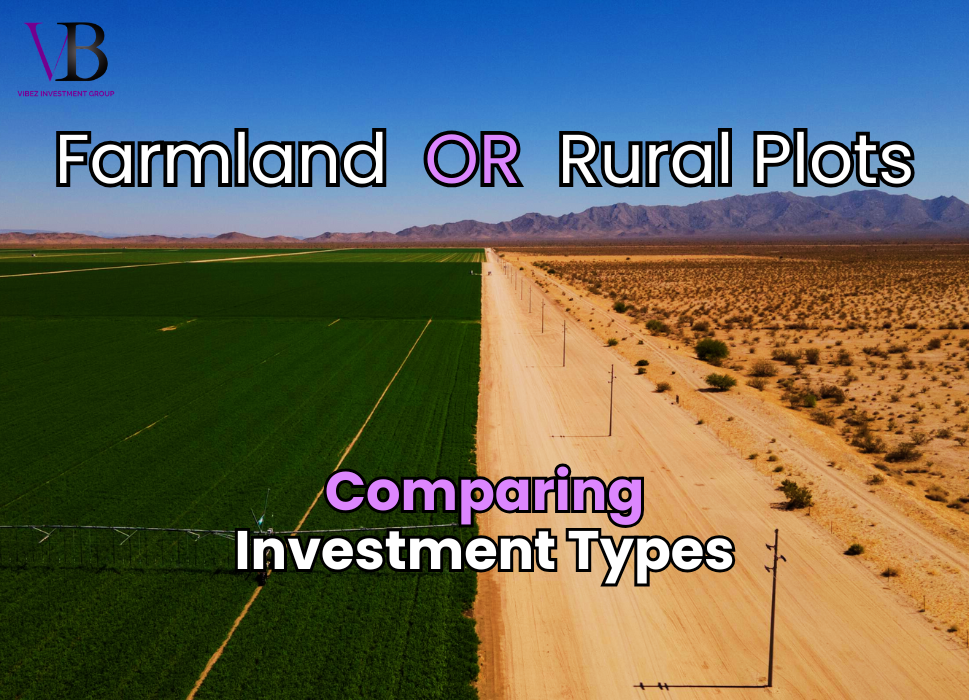
In the ever-evolving world of real estate, land investment remains one of the most timeless and tangible forms of asset acquisition. Whether it’s a sprawling piece of agricultural farmland or a quiet rural plot tucked away in a scenic corner of the country, both offer distinct advantages and potential pitfalls.
Choosing between farmland and rural plots hinges on multiple factors including investment goals, location, usage, income generation, and liquidity. In this article, we will comprehensively compare farmland and rural plots as investment options, backed by real-world insights, latest statistics, and a close look at Vibez Investment, a leader in land acquisition in the U.S.
Understanding Farmland Investments in 2025
Farmland, by definition, is land specifically used for agricultural production. This includes crop cultivation, livestock farming, orchards, and more. Farmland is not just real estate it’s a resource, a business, and an economic driver.
Why Farmland Appeals to Investors
Farmland has long been prized for its stability and resilience. Unlike other volatile investments like stocks or cryptocurrencies, farmland often appreciates steadily over time. According to the USDA’s 2024 Land Values Summary, the average value of U.S. cropland increased to $5,460 per acre, a 7.4% rise from the previous year.
In states like Iowa and Nebraska, top-tier farmland can fetch even higher prices due to fertility and infrastructure. This stability makes it a hedge against inflation and economic uncertainty. Moreover, farmland can produce recurring income through lease agreements with farmers or through direct farming operations.
Benefits of Farmland Investments
- Tangible Asset: It’s a finite resource land cannot be created.
- Income Potential: Leasing to farmers generates steady income.
- Tax Advantages: Farmland can qualify for reduced property tax under agricultural exemptions.
- Appreciation: Farmland values have shown consistent long-term growth.
Challenges with Farmland
Despite its allure, farmland comes with its own complexities. Managing a working farm or even leasing it out requires regulatory knowledge, understanding of agricultural markets, and sometimes, substantial upfront investment. Environmental factors, commodity price volatility, and water rights are significant considerations.
Rural Plots: The Hidden Potential
Rural plots, on the other hand, are typically undeveloped lands situated in less populated areas. These plots may not be zoned for agriculture but could be used for future residential development, recreational use, vacation homes, or simply held for appreciation.
Flexibility and Accessibility
One of the biggest advantages of rural plots is their versatility. Whether you want to build a small home, develop a glamping site, or simply hold the land as a passive investment, rural plots allow more flexibility. They also tend to be more affordable than farmland, especially in states with expansive rural regions like Texas, Arizona, or New Mexico.
According to a 2024 report by LandThink, rural land prices in the U.S. average between $2,000 to $3,000 per acre, depending on location and access to utilities. This makes them more accessible for new investors or individuals seeking a second home or retirement site.
Key Benefits of Investing in Rural Plots
- Lower Entry Cost: More affordable than farmland in most regions.
- Development Potential: Can be subdivided or developed depending on zoning laws.
- Low Maintenance: No operational activity required unless developed.
- Growing Demand: Rising interest in off-grid living and rural escapes post-COVID.
Drawbacks to Consider
Rural plots are not without challenges. They often lack utilities or infrastructure, making development costly. Their resale value can be slow to grow, especially in isolated areas. Without zoning for residential or commercial use, flipping or leasing the land can be difficult.
Land Trends in 2025: The Bigger Picture
The post-pandemic shift in lifestyle preferences continues to shape land investment. As urban dwellers seek space, tranquility, and independence, both farmland and rural plots are seeing increased attention. Additionally, climate-conscious investors are exploring regenerative agriculture and carbon offset projects, further enhancing the value of farmland.
According to National Land Realty’s 2025 Mid-Year Report, rural land inquiries rose 13% in Q1 2025, while farm leasing contracts were up by 9%. These numbers suggest growing confidence in land as a reliable investment.
The Role of Vibez Investment in Land Acquisition
While investing in land can be profitable, selling the plot can become the real challenge. This is where companies like Vibez Investment come into the picture.
Who is Vibez Investment Company?
Vibez Investment Company provides specialized services in buying vacant land directly from property owners across the United States. They are not real estate agents they’re direct buyers. This distinction is important because it translates to faster deals, no commissions, and zero middlemen.
Whether you own a piece of unused farmland or a rural plot you’ve inherited or no longer want, Vibez Investment offers a straightforward, three-step process to sell your land with ease:
- Share Property Details: A simple form or call is enough to get started.
- Receive a Custom Offer: The company uses market data and trends to present a fair cash offer.
- Close with Confidence: With licensed title companies handling paperwork, closings are secure and smooth.
Why Landowners Trust Vibez
Vibez Investment stands out because of its transparency, professionalism, and speed. Many landowners feel overwhelmed when trying to sell unused property, especially when facing unclear zoning laws, title complications, or distant buyers. Vibez eliminates these barriers.
Key benefits include:
- No fees or commissions
- Fast, personalized cash offers
- Full legal and title support
- Nationwide coverage
They’ve earned the trust of thousands of property owners nationwide, and their model particularly suits those who want to liquidate farmland or rural plots quickly without the headaches of traditional listings.
When Should You Choose Farmland?
Farmland is ideal in the following situations:
- You’re interested in long-term value and annual income.
- You have knowledge (or advisors) in agriculture.
- The land is located in high-demand farming regions.
- You’re looking to diversify with a tangible, productive asset.
When Are Rural Plots Better?
Rural plots make more sense if:
- You want a low-cost entry point into land investment.
- You plan to develop for residential or recreational use.
- You are targeting long-term appreciation in growing regions.
- You’re not interested in managing an active farming operation.
Which Land Investment is Right for You?
Ultimately, the decision between farmland and rural plots depends on your goals, risk tolerance, and resources. Farmland offers stability, income, and long-term value, while rural plots provide flexibility, affordability, and future potential.
In either case, understanding the legal, environmental, and market landscape is crucial. If you already own land and are looking to exit your investment, Vibez Investment Company offers a smart, straightforward way to sell backed by professional support and a reputation for fairness.
Investing in land isn’t just about buying a piece of the earth it’s about envisioning its future and aligning it with your own. Schedule a visit with Vibez Investment and let us help you make the wise investment decisions with the right real-estate options.
FAQs
What’s the difference between investing in farmland versus rural plots?
Investing in farmland typically means acquiring land actively used for crops or grazing offering both income and land appreciation. Rural plots, by contrast, might be undeveloped parcels, forested land, or hobby‑farm plots without agricultural production. Farmland tends to provide steady lease income, while rural plots may offer more speculative capital appreciation depending on zoning or development potential.
How much can I expect to earn annually from farmland investments?
Historically, farmland has delivered total annual returns between around 8 % and 12 %, combining rental income, crop revenue, and land appreciation Iowa State University Extension. Meanwhile, the current cash‑rent return (lease yield) in places like Illinois averages about 2.8 % of land value.
Do farmland returns vary by region?
Absolutely. For example, key agricultural states like Iowa and Kansas saw rapid land value growth (up to ~19% in 2021–22), but more recent annual increases have cooled to around 4–8 % in 2023–24. Prices also differ—with Iowa averaging about $9,420/acre, California $13,400/acre, while Mountain or Appalachian regions may be under $2,700/acre.
Which investment type is better for a long‑term inflation hedge?
Farmland is widely regarded as a solid long‑term inflation hedge land values and crop prices tend to rise with inflation, while leases often adjust over time. Rural plots may keep value in face of inflation too, especially if located near expanding towns, but they lack the dual income and appreciation structure of farmland, making conservation of real value less predictable.
Do rural plots offer similar returns to farmland?
Not typically. Rural plots, especially non‑agricultural ones, may lack rental income streams and instead rely solely on long‑term capital appreciation. Returns are often speculative, depending on development prospects, zoning changes, or amenity value, and they don’t enjoy the same predictable yields that farmland does.
What are the main risks of putting money into farmland?
The key risks include climate and weather volatility (droughts, floods), commodity price swings, regulatory or subsidy changes, and liquidity constraints given the long-term nature of land investments. Moreover, if interest rates stay elevated, rental yields may suffer, and land values could adjust down slightly.